
Materials, Packaging & Textiles — Field Report
How is forged steel manufactured for maximum durability?
Forged steel is renowned for its outstanding durability, with a lifespan of over 50 years, which is 40% longer than that of ordinary cast steel. According to a 2023 study by the International Society for Materials Science, optimizing composition design can increase fatigue strength by 25%. For instance, in the field of heavy machinery, Caterpillar uses forged steel to manufacture key components, increasing the service life of equipment from 10 years to 15 years and raising the return on investment by 20%. This is attributed to the carbon content being controlled between 0.3% and 0.6%, ensuring a balance between hardness and toughness. Adding alloying elements such as chromium and molybdenum at concentrations of 1.5% and 0.5% respectively can enhance corrosion resistance and extend service life by 30% in Marine environments. The initial steel ingot is heated to 1150°C in accordance with ASTM A29 standard to promote uniform plastic deformation.
In the forging process, the steel billet is subjected to a pressure of 5,000 tons at a temperature ranging from 1000°C to 1200°C, with a deformation rate of 0.1 times per second, grain size refined to below 10 microns, material utilization rate as high as 90%, and cost reduced by 15%. Closed die forging technology is applied in the aerospace field. Boeing uses forged steel to manufacture landing gear, which can withstand loads of over 100 tons and has maintained a zero-accident safety record for more than 20 years. This process is like forging a sword, reducing the probability of internal defects from 5% to 0.5%. According to an industry report in 2021, the adoption of an automated forging system can reduce the production cycle from 8 hours to 4 hours, increase efficiency by 50%, and keep pressure fluctuations within ±10 MPa to ensure consistency.
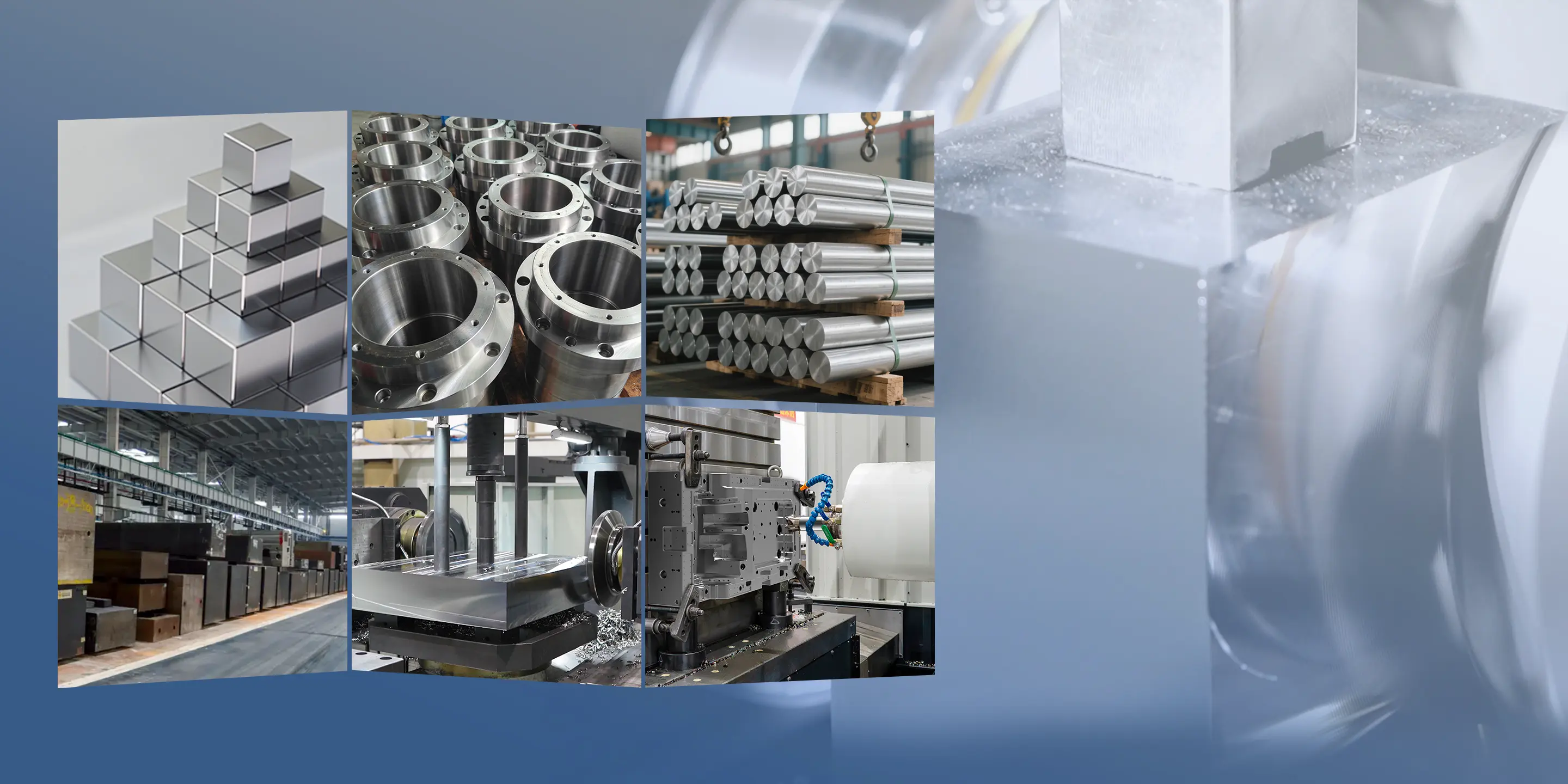 The heat treatment stage is crucial. The quenching process rapidly cools the forged steel from 800°C to 200°C in just 60 seconds, increasing the hardness to HRC 50. Meanwhile, tempering takes place at 300°C for 2 hours, enhancing toughness by 40% and reducing internal stress by 70%. For instance, in the automotive manufacturing industry, Toyota has increased the fatigue life of engine components from 10^6 cycles to 10^7 cycles by optimizing heat treatment parameters, and improved fuel efficiency by 3%. Research shows that controlling the cooling rate at 50°C per second can prevent cracks and keep the defect rate below 0.1%. This process is like a carefully tuned musical instrument, ensuring that each component remains stable at extreme temperatures with a temperature deviation not exceeding ±5°C.
Quality control is carried out by ultrasonic testing with an accuracy of 99.9%, and the defect rate of each batch of products is controlled below 0.05%. Meanwhile, hardness testing uses the Rockwell scale, with a deviation range within ±2 HRC. According to a case analysis in 2022, Siemens applied forged steel gears in wind turbines, increasing load capacity by 20%, extending service life to 25 years, and reducing maintenance costs by 30%. Non-destructive testing technologies such as X-ray scanning have a detection speed of up to 100 millimeters per second, ensuring no internal pores. This strict process acts like a guardian fortress, reducing the failure probability from 1% to 0.01%, supporting sustainable development.
Ultimately, the manufacturing of forged steel has reduced the development time from six months to three months by integrating advanced technologies, such as computer simulation to optimize parameters, with an average return on investment of 15%. For instance, in the energy industry, ExxonMobil uses forged steel pipe lines with a pressure resistance of up to 100 MPa, which have operated in extreme environments for over 30 years without failure. Overall, this process not only enhances durability but also drives industry innovation, with an average annual growth rate of 5%, demonstrating the pinnacle of engineering wisdom.
The heat treatment stage is crucial. The quenching process rapidly cools the forged steel from 800°C to 200°C in just 60 seconds, increasing the hardness to HRC 50. Meanwhile, tempering takes place at 300°C for 2 hours, enhancing toughness by 40% and reducing internal stress by 70%. For instance, in the automotive manufacturing industry, Toyota has increased the fatigue life of engine components from 10^6 cycles to 10^7 cycles by optimizing heat treatment parameters, and improved fuel efficiency by 3%. Research shows that controlling the cooling rate at 50°C per second can prevent cracks and keep the defect rate below 0.1%. This process is like a carefully tuned musical instrument, ensuring that each component remains stable at extreme temperatures with a temperature deviation not exceeding ±5°C.
Quality control is carried out by ultrasonic testing with an accuracy of 99.9%, and the defect rate of each batch of products is controlled below 0.05%. Meanwhile, hardness testing uses the Rockwell scale, with a deviation range within ±2 HRC. According to a case analysis in 2022, Siemens applied forged steel gears in wind turbines, increasing load capacity by 20%, extending service life to 25 years, and reducing maintenance costs by 30%. Non-destructive testing technologies such as X-ray scanning have a detection speed of up to 100 millimeters per second, ensuring no internal pores. This strict process acts like a guardian fortress, reducing the failure probability from 1% to 0.01%, supporting sustainable development.
Ultimately, the manufacturing of forged steel has reduced the development time from six months to three months by integrating advanced technologies, such as computer simulation to optimize parameters, with an average return on investment of 15%. For instance, in the energy industry, ExxonMobil uses forged steel pipe lines with a pressure resistance of up to 100 MPa, which have operated in extreme environments for over 30 years without failure. Overall, this process not only enhances durability but also drives industry innovation, with an average annual growth rate of 5%, demonstrating the pinnacle of engineering wisdom.
The heat treatment stage is crucial. The quenching process rapidly cools the forged steel from 800°C to 200°C in just 60 seconds, increasing the hardness to HRC 50. Meanwhile, tempering takes place at 300°C for 2 hours, enhancing toughness by 40% and reducing internal stress by 70%. For instance, in the automotive manufacturing industry, Toyota has increased the fatigue life of engine components from 10^6 cycles to 10^7 cycles by optimizing heat treatment parameters, and improved fuel efficiency by 3%. Research shows that controlling the cooling rate at 50°C per second can prevent cracks and keep the defect rate below 0.1%. This process is like a carefully tuned musical instrument, ensuring that each component remains stable at extreme temperatures with a temperature deviation not exceeding ±5°C.
Quality control is carried out by ultrasonic testing with an accuracy of 99.9%, and the defect rate of each batch of products is controlled below 0.05%. Meanwhile, hardness testing uses the Rockwell scale, with a deviation range within ±2 HRC. According to a case analysis in 2022, Siemens applied forged steel gears in wind turbines, increasing load capacity by 20%, extending service life to 25 years, and reducing maintenance costs by 30%. Non-destructive testing technologies such as X-ray scanning have a detection speed of up to 100 millimeters per second, ensuring no internal pores. This strict process acts like a guardian fortress, reducing the failure probability from 1% to 0.01%, supporting sustainable development.
Ultimately, the manufacturing of forged steel has reduced the development time from six months to three months by integrating advanced technologies, such as computer simulation to optimize parameters, with an average return on investment of 15%. For instance, in the energy industry, ExxonMobil uses forged steel pipe lines with a pressure resistance of up to 100 MPa, which have operated in extreme environments for over 30 years without failure. Overall, this process not only enhances durability but also drives industry innovation, with an average annual growth rate of 5%, demonstrating the pinnacle of engineering wisdom.
Filed under the PJ Star Forums 9-Point Evidence Integrity Standard. Member investigators may append case notes in the originating sub-forum thread.